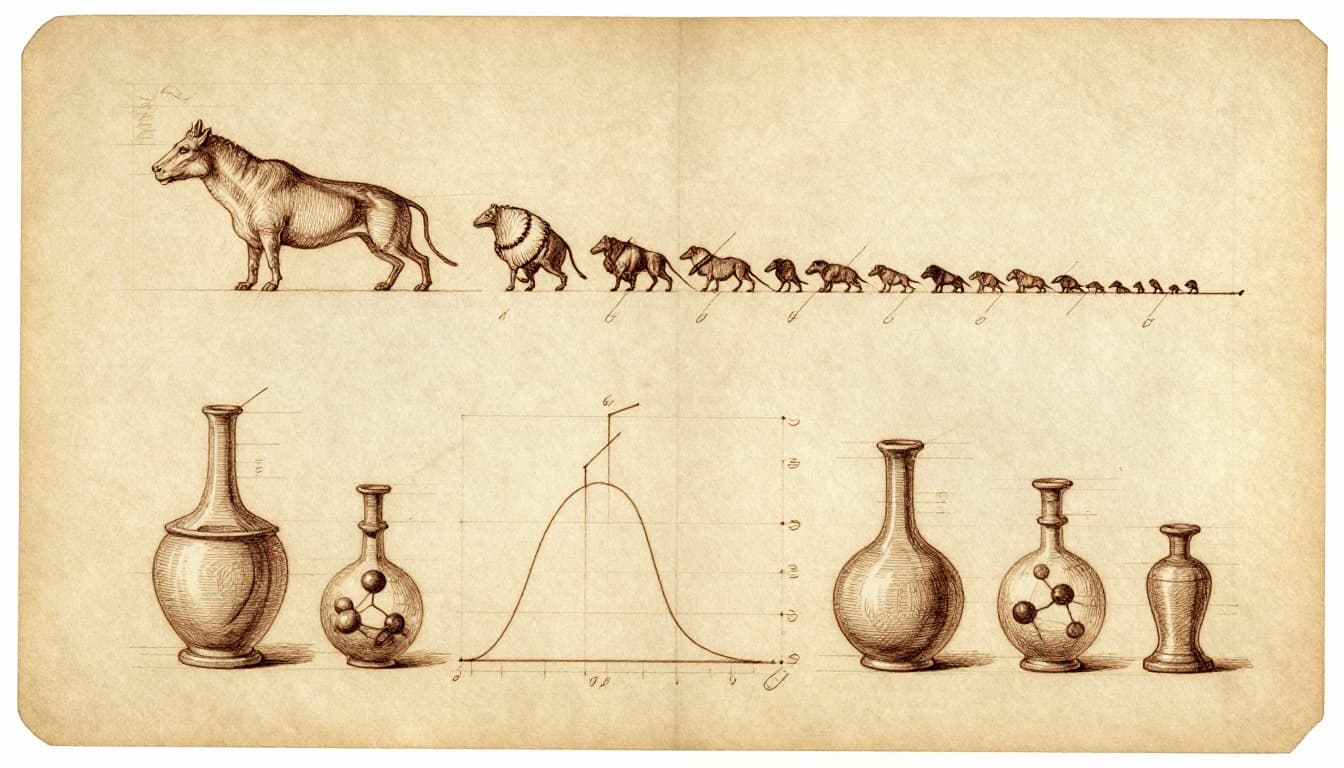
AI Agents Reshaping Drug Discovery Paradigm, Breaking Cognitive Blind Spots
March 25, 2026 • Source: Frontline Genomics
Artificial intelligence is fundamentally transforming new drug development, moving beyond traditional sequential problem-solving to a data-driven approach. This shift enhances virtual drug screening capabilities, allowing for broader chemical space exploration and more effective resource allocation. The adoption of AI agents is accelerating target discovery, improving disease mechanism analysis, and is expected to increase clinical trial success rates while reducing scientific uncertainty in pharmaceutical R&D, as reported by Frontline Genomics.
**Key Facts:** • AI agents are fundamentally transforming new drug development. • Shift from traditional step-by-step problem-solving to data-driven approaches. • Enhances speed of virtual drug screening and chemical space exploration. • Accelerates target discovery and improves disease mechanism analysis. • Expected to increase clinical trial success rates. • Reduces scientific uncertainty in new drug R&D. • Reported by Frontline Genomics on March 25, 2026.
AI agents are fundamentally transforming the landscape of new drug development, moving beyond traditional sequential problem-solving to establish a data-driven paradigm that promises to accelerate discovery and mitigate inherent R&D uncertainties, according to a recent Frontline Genomics report.
Redefining Drug Discovery Through AI Agents
The pharmaceutical industry is undergoing a fundamental transformation, shifting from traditional sequential problem-solving to a sophisticated data-driven paradigm powered by artificial intelligence. This evolution, highlighted by Frontline Genomics in March 2026, allows drug developers to overcome inherent cognitive blind spots that previously constrained molecular exploration. By leveraging AI agents, the industry can now process and interpret vast, complex datasets concurrently, moving beyond the linear, hypothesis-driven research model to one based on advanced predictive analytics and rapid iteration.
This shift significantly enhances the speed and scope of virtual drug screening. AI agents enable the rapid evaluation of millions, even billions, of potential drug candidates within a fraction of the time required by conventional high-throughput screening methods. This expanded exploration of chemical space allows researchers in both established pharmaceutical companies and agile biotechnology startups to identify novel lead compounds more efficiently, directing precious resources toward the molecules exhibiting the highest promise for therapeutic development, thereby optimizing the initial stages of the R&D pipeline.
The departure from traditional step-by-step problem-solving means a more integrated and holistic approach to discovery. Instead of isolated experiments, AI orchestrates a continuous learning loop, where data from diverse sources—genomic, proteomic, clinical, and synthetic chemistry—are analyzed in concert. This integrated analytical capability reduces the empirical trial-and-error often associated with early drug discovery, promising a more targeted and cost-effective pathway to identifying viable therapeutic candidates for a range of diseases.
Accelerating Target Identification and Mechanistic Understanding
A primary operational benefit stemming from the adoption of AI agents is the accelerated pace of target discovery. AI algorithms can analyze intricate biological networks and disease pathways from massive datasets to pinpoint novel, highly specific drug targets with unprecedented precision. This capability is invaluable for pharmaceutical and biotechnology firms striving to develop first-in-class therapies, substantially reducing the investigative lead time and improving the strategic focus on the most impactful biological mechanisms for intervention.
Concurrently, AI agents are significantly improving the analysis of complex disease mechanisms, providing deeper insights into pathology at a molecular level. For academic research institutions and government labs, these tools offer advanced capabilities for dissecting cellular processes and understanding disease progression. This enhanced mechanistic understanding is crucial for developing therapies that address root causes rather than just symptoms, leading to more effective treatments and opening new avenues for drug development in challenging disease areas.
For clinical research organizations (CROs) and diagnostic labs, refined understanding derived from AI-driven analysis translates into more intelligent trial design and biomarker identification. This precision in preclinical assessment and early-stage clinical planning enhances the probability of success for subsequent trial phases, mitigating risks associated with unforeseen toxicities or lack of efficacy. This strategic application of AI improves the scientific rigor and overall efficiency of clinical development programs.
Mitigating Clinical Uncertainty and Economic Advantages
A pivotal impact of AI integration is its projected ability to increase the success rate of clinical trials, a critical metric for the pharmaceutical industry. By leveraging predictive AI models, drug developers can more accurately forecast drug efficacy and potential adverse effects during preclinical and early clinical stages. This data-driven candidate selection minimizes the likelihood of expensive late-stage failures, which traditionally account for a substantial portion of R&D costs and delays in bringing new medications to patients.
The reduction in scientific uncertainty across the entire new drug R&D spectrum holds significant economic advantages. For enterprise buyers in large pharmaceutical corporations and biomanufacturing firms, this translates into more predictable development timelines and a more favorable return on investment. Minimizing unexpected hurdles in drug development pipelines ensures resources are allocated optimally, reducing waste and accelerating the path to market for innovative treatments. This creates a stronger, more resilient R&D strategy.
This de-risking mechanism is poised to reshape financial strategies within the life sciences. Investors and industry analysts are closely monitoring these advancements, recognizing that improved predictability in R&D could unlock substantial value. Companies that effectively integrate AI agents into their discovery processes stand to gain a significant competitive advantage, both in terms of market share through faster product launches and enhanced profitability from more efficient resource utilization.
Broader Industry Repercussions and Future Outlook
The transformative influence of AI agents extends far beyond traditional drug discovery, impacting a wide array of life science sectors. In Agricultural & Food Science, similar AI methodologies can be applied to identify novel compounds for crop protection, yield enhancement, or disease resistance, improving global food security. Environmental & Conservation efforts could utilize AI for bioremediation strategies, identifying molecules capable of neutralizing pollutants, demonstrating the expansive utility of these advanced computational tools.
Diagnostic & Clinical Labs will benefit from faster and more accurate diagnostic tools, while Healthcare & Hospital Systems will ultimately see a more rapid pipeline of effective, targeted therapies for patient care. Government & National Labs will find AI invaluable for public health initiatives and biodefense, enabling quicker responses to emerging biological threats. This pervasive impact signals a fundamental shift in how biological problems are approached and solved across numerous disciplines.
As AI agents continue to evolve, their capacity to learn, adapt, and make inferences will further refine their role in biological innovation. This trend suggests a future where drug discovery is not only faster and more efficient but also profoundly more insightful, enabling breakthroughs in areas previously deemed intractable due to complexity or data volume. The promise of breaking through cognitive blind spots represents a new era of scientific exploration and therapeutic development.
Published March 25, 2026
More NewsLast updated: March 25, 2026