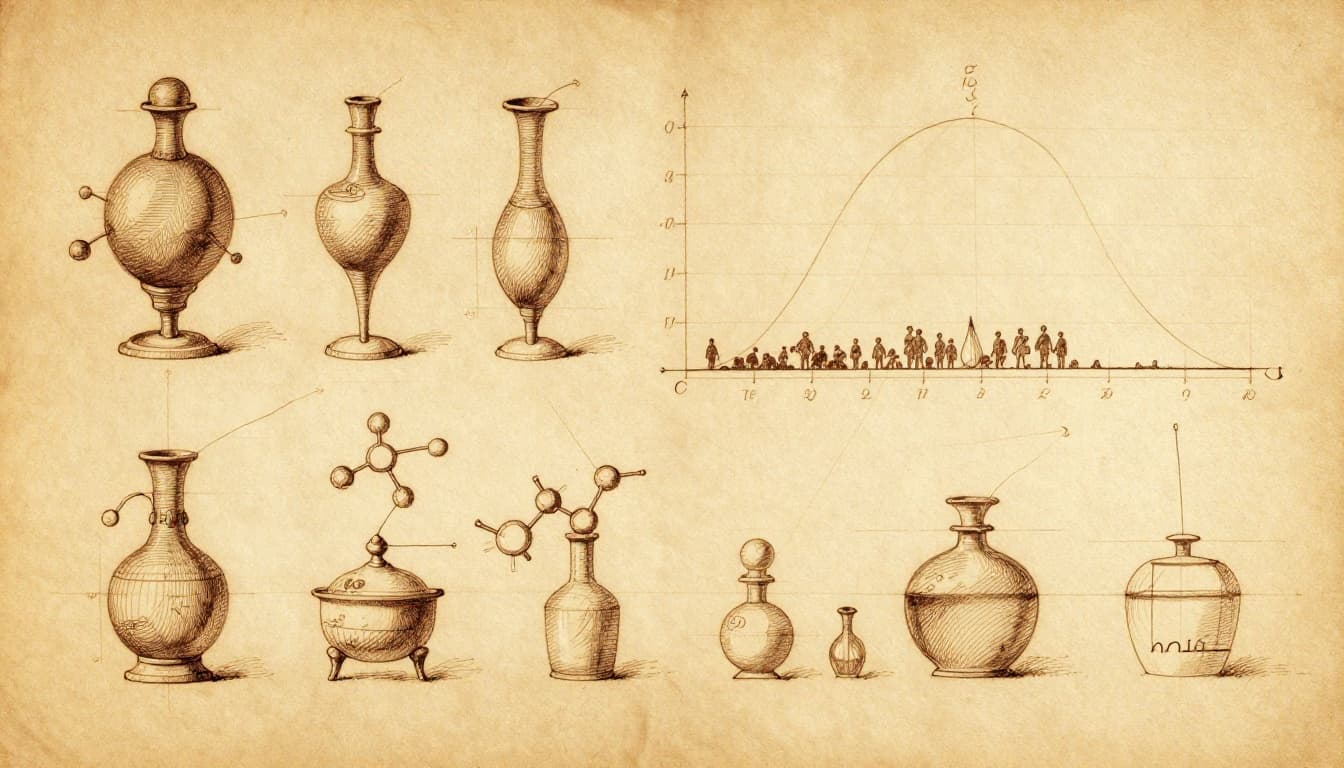
AI Transforms Personalized Cancer Treatment and Drug Discovery
April 4, 2026 • Source: Seeking Alpha
Artificial intelligence is fundamentally reshaping personalized cancer treatment and drug discovery by transforming biological challenges into data-centric problems. This shift accelerates critical processes like mutation prioritization and protein structure prediction, compressing traditional multi-year R&D cycles into continuous, computational workflows. AI-identified drug candidates are now progressing through Phase I clinical trials at an elevated success rate, signaling a significant evolution in pharmaceutical development.
**Key Facts:** • AI converts biological research into a data-driven problem, accelerating therapeutic decisions. • Mutation prioritization and protein structure prediction are significantly accelerated by AI algorithms. • Traditional multi-year drug discovery processes are now consolidated into continuous computational workflows. • AI-discovered drugs demonstrate a significantly higher success rate in Phase I clinical trials. • The technology provides operational and revenue benefits across pharmaceutical, biotech, and clinical sectors.
Artificial intelligence is rapidly converting complex biological research into a data-driven science, fundamentally altering the landscape of personalized cancer treatment and drug discovery. This paradigm shift accelerates the identification of therapeutic targets and streamlines drug development, demonstrating immediate, tangible impacts on clinical trial success rates and R&D efficiencies across the life sciences ecosystem.
Transforming Biological Discovery into a Data Science
AI's primary impact lies in its ability to abstract biological complexity into manageable data points. This reorientation moves beyond traditional empirical methods, allowing researchers to apply computational rigor to challenges previously addressed through labor-intensive lab work. For personalized cancer treatment, this means transitioning from broad-spectrum approaches to highly specific, patient-centric interventions derived directly from extensive genomic and proteomic data.
This data-centric approach critically enhances two bottlenecks in drug discovery: mutation prioritization and protein structure prediction. Machine learning algorithms can rapidly analyze vast genomic datasets to identify actionable somatic mutations in tumors, distinguishing drivers from passengers. Simultaneously, AI models are achieving unprecedented accuracy and speed in predicting complex protein structures, which is essential for rational drug design and understanding intricate disease mechanisms.
The capacity to quickly parse genetic variations and visualize target proteins with high fidelity allows for accelerated hypothesis generation and validation. This foundational shift empowers researchers in academic institutions and government labs to explore novel therapeutic avenues that were previously computationally intractable. It effectively democratizes advanced biological inquiry by providing powerful analytical tools, broadening the scope of scientific investigation.
Operational Efficiencies and Accelerated Clinical Translation
AI is collapsing the protracted multi-year timelines traditionally associated with drug discovery. By integrating various R&D stages—from target identification to lead optimization—into a continuous computational workflow, the time from concept to candidate selection is drastically reduced. This streamlines resource allocation and minimizes the opportunity cost associated with lengthy, high-risk development cycles inherent in traditional pharmaceutical pipelines, driving efficiency.
A tangible result of this integration is the improved success rate for AI-discovered drug candidates entering clinical trials. Data indicates that therapeutics identified or optimized through AI platforms are progressing through Phase I clinical trials at a significantly higher rate compared to conventionally developed drugs. This improved early-stage success reduces attrition in later phases, offering substantial long-term cost savings and faster market access for novel treatments.
For pharmaceutical enterprises and biotechnology startups, this operational efficiency translates directly into significant revenue implications. Faster drug pipelines mean quicker returns on investment and the ability to bring more innovative therapies to market within critical patent protection windows. Contract Research Organizations (CROs) can leverage these advanced AI tools to offer more rapid and cost-effective services, enhancing their competitive positioning and expanding their service portfolios for clients globally.
Broadening Impact Across Life Science Ecosystems
The implications of AI-driven drug discovery extend across the entire pharmaceutical value chain. For established pharmaceutical companies, AI offers a strategic imperative to de-risk R&D portfolios and unlock previously intractable disease targets. Biotechnology startups gain a competitive advantage by rapidly iterating on novel compounds and demonstrating early clinical promise, attracting critical investment and forging strategic partnerships.
Academic research institutions and university labs are leveraging AI to conduct more sophisticated basic science, translating fundamental discoveries into potential therapeutic candidates with greater precision. This fosters a more dynamic ecosystem where computational insights can guide experimental design, significantly accelerating the pace of scientific advancement and collaboration with industry partners on translational research.
In clinical settings, AI's role in personalized cancer treatment promises more precise diagnostic and therapeutic strategies. Diagnostic & Clinical Labs can implement AI for faster, more accurate interpretation of complex patient data, guiding oncologists towards optimal treatment regimens. For Healthcare & Hospital Systems, this translates to improved patient outcomes, reduced healthcare costs associated with ineffective treatments, and the ability to offer cutting-edge, data-informed care, setting new standards for patient management.
Strategic Advantages and Future Trajectories
Beyond immediate medical applications, the principles of AI-driven biological data analysis hold strategic advantages for other sectors. In Agricultural & Food Science, AI can optimize crop yields, identify disease resistance genes, and develop sustainable practices. For Environmental & Conservation efforts, it aids in understanding complex ecosystem dynamics, predicting environmental changes, and developing bioremediation strategies, showcasing its versatility across diverse biological challenges.
Biomanufacturing & Bioprocess industries are rapidly adopting AI to optimize fermentation processes, improve protein expression, and ensure stringent quality control, leading to more efficient and cost-effective production of biologics and novel materials. Government & National Labs are investing significantly in AI infrastructure to address national health priorities, biodefense, and fundamental research, building robust capabilities for future biological challenges and innovation.
The long-term trajectory indicates a continued and deepening fusion of AI and biology, necessitating ongoing investment in robust data infrastructure, specialized computational talent, and interdisciplinary collaboration. Success will increasingly depend on organizations’ ability to seamlessly integrate diverse data types – from genomic sequencing to real-world clinical data – and apply advanced AI models to generate actionable biological insights. This foundational shift is permanent, driving a new era of biological innovation.
Published April 4, 2026
More NewsLast updated: April 4, 2026