Merck and Mayo Clinic Partner on AI to Accelerate MS Drug Discovery
February 23, 2026 • Source: Fierce Biotech
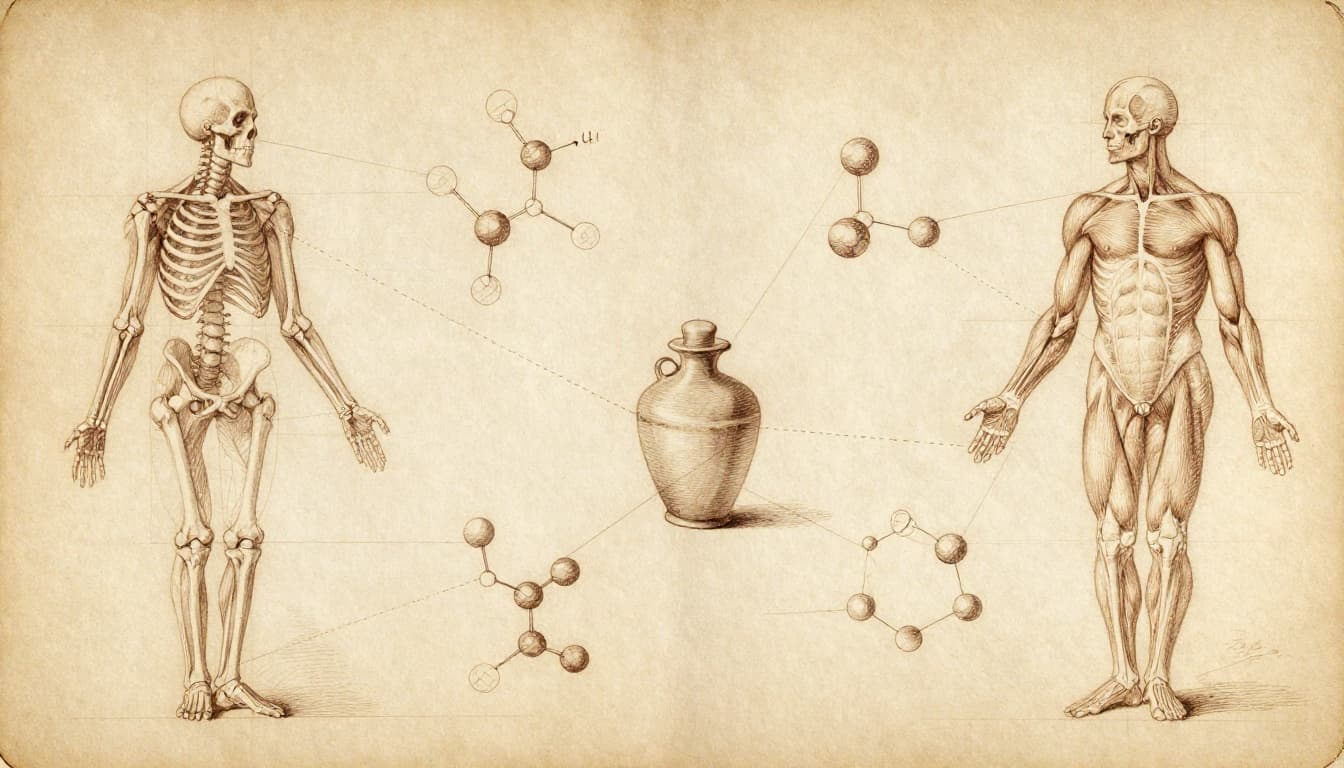
Merck and Mayo Clinic have initiated a research collaboration, leveraging artificial intelligence and extensive clinical data to expedite drug discovery, with an initial focus on multiple sclerosis. This partnership integrates Mayo's vast datasets with Merck's AI-driven research platforms, including advanced virtual cell technologies, aiming to transform traditional drug development pipelines.
**Key Facts:** • Merck and Mayo Clinic announce a research collaboration. • Partnership utilizes AI and large-scale clinical data. • Initial focus is on accelerating drug discovery for multiple sclerosis (MS). • Leverages Mayo's clinical and genomic datasets with Merck's AI-enabled virtual cell platforms. • Aims to expedite R&D timelines and improve drug candidate identification.
In a strategic move set to redefine drug development paradigms, pharmaceutical giant Merck and the renowned Mayo Clinic have announced a research collaboration to deploy artificial intelligence (AI) and large-scale clinical data, specifically targeting the acceleration of therapies for multiple sclerosis (MS). This partnership, unveiled on February 23, 2026, by Fierce Biotech, underscores a growing industry-wide pivot towards AI-driven methodologies designed to compress traditionally lengthy and resource-intensive research and development (R&D) cycles.
Strategic Integration of AI and Clinical Data
The collaboration unites Mayo Clinic's comprehensive clinical and genomic datasets with Merck's advanced AI-enabled research technologies, notably its virtual cell platforms. This synergy is designed to unlock novel insights into the complex pathophysiology of multiple sclerosis, a chronic inflammatory disease affecting the central nervous system. The ambition is to move beyond conventional drug screening methods, leveraging predictive analytics to identify potential therapeutic targets and drug candidates with greater precision and speed.
Merck's deployment of AI-enabled virtual cell platforms signifies a commitment to in-silico experimentation, simulating biological processes and drug interactions within a computational environment. This approach promises to reduce the reliance on costly and time-consuming wet-lab experiments, thereby streamlining early-stage drug discovery. By integrating these AI capabilities with Mayo Clinic's deep reservoir of patient data, the partnership aims to bridge the gap between biological insights and actionable drug development, addressing long-standing bottlenecks in therapeutic innovation.
The primary objective extends beyond mere data analysis; it seeks to create a robust, scalable framework for drug discovery that can be applied to other complex diseases in the future. By focusing initially on MS, a condition characterized by significant patient heterogeneity and unmet medical needs, the partners aim to validate the efficacy of their integrated AI-driven approach. This foundational work is anticipated to establish new benchmarks for efficiency and effectiveness in pharmaceutical R&D, influencing broader strategies across the biopharmaceutical sector.
Operational Impact on Drug Discovery and Development
For the pharmaceutical and biotechnology sectors, this partnership signals a substantial operational shift. The ability to analyze vast clinical and genomic datasets with AI tools promises to accelerate target identification and validation, which are critical initial steps in drug discovery. Traditionally, these processes can take years and consume significant resources, often with high failure rates. AI's capacity for pattern recognition and predictive modeling offers a pathway to more efficient candidate selection, potentially reducing the overall timeline for bringing new drugs to market.
Clinical Research Organizations (CROs) and Academic Research & Universities will observe an evolution in how drug development programs are conceptualized and executed. The integration of AI for patient stratification, based on genetic markers and clinical phenotypes identified from Mayo Clinic's data, can lead to more targeted and efficient clinical trial designs. This not only enhances the likelihood of trial success but also reduces the number of patients required for studies, optimizing resource allocation and accelerating recruitment, thereby lowering operational costs associated with large-scale clinical investigations.
Furthermore, Diagnostic & Clinical Labs stand to benefit from the advanced biomarker discovery facilitated by this AI partnership. As AI identifies subtle biological signatures associated with MS progression or therapeutic response, these insights can be translated into novel diagnostic tools. This development can lead to earlier and more accurate diagnoses, as well as personalized treatment monitoring, ultimately improving patient outcomes within Healthcare & Hospital Systems. The precision offered by AI in identifying disease mechanisms contributes directly to more effective and targeted therapeutic strategies.
Broader Industry Relevance and Economic Implications
This collaboration between Merck, a global pharmaceutical leader, and Mayo Clinic, a top-tier medical research institution, sets a significant precedent for the entire life sciences industry. For Biotechnology Startups, it validates the strategic importance of AI and digital biology platforms, potentially driving increased investment and fostering new startup ecosystems focused on AI-driven drug discovery. It also highlights opportunities for smaller firms to partner with larger entities by offering specialized AI tools or datasets, influencing future merger and acquisition activities in the sector.
From an economic perspective, accelerating drug discovery for complex diseases like MS holds immense potential. Reducing R&D timelines and improving success rates can lead to earlier market entry for novel therapies, securing longer periods of patent exclusivity and significantly boosting revenue potential for pharmaceutical companies like Merck. The ability to identify effective drugs faster can translate into billions of dollars saved in R&D costs and gained through market access, offering a substantial return on investment in AI capabilities.
Beyond direct drug development, the methodologies refined through this partnership have transferable applications. Government & National Labs, as well as Biomanufacturing & Bioprocess sectors, could leverage similar AI-driven data analysis frameworks to optimize various biological processes, from vaccine development to bioproduct manufacturing. Even in fields like Agricultural & Food Science or Environmental & Conservation, the principles of using AI to model complex biological systems and predict outcomes from large datasets can enhance efficiency and inform critical decision-making, showcasing the far-reaching impact of advanced digital biology initiatives.
Future Outlook and Competitive Landscape
The Merck-Mayo Clinic partnership positions both organizations at the forefront of a rapidly evolving competitive landscape in drug discovery. Companies that fail to invest in AI and large-scale data integration risk being outpaced by more agile, technologically advanced competitors. This collaboration underscores that future success in pharmaceutical innovation will increasingly depend on the effective synthesis of biological expertise, clinical data, and cutting-edge artificial intelligence, rather than traditional empirical approaches alone.
The initial focus on multiple sclerosis, a disease with a significant global burden and diverse patient responses, provides a robust testbed for this advanced AI framework. Successful outcomes in MS drug discovery could pave the way for expanding the partnership's scope to other challenging therapeutic areas, including oncology, neurodegenerative diseases, and rare disorders. This scalability represents a critical long-term operational advantage, allowing for the rapid deployment of validated AI models across new disease contexts.
Ultimately, the economic implications extend to overall healthcare efficiency. By accelerating the development of more effective and precisely targeted treatments, the partnership has the potential to reduce the long-term healthcare costs associated with managing chronic diseases. This includes decreased hospitalizations, fewer adverse events, and improved quality of life for patients. For enterprise buyers and industry analysts, this collaboration serves as a powerful indicator of the strategic direction for high-impact innovation in digital biology, signaling where future investment and competitive advantages will lie.
Published February 23, 2026
More NewsLast updated: February 24, 2026