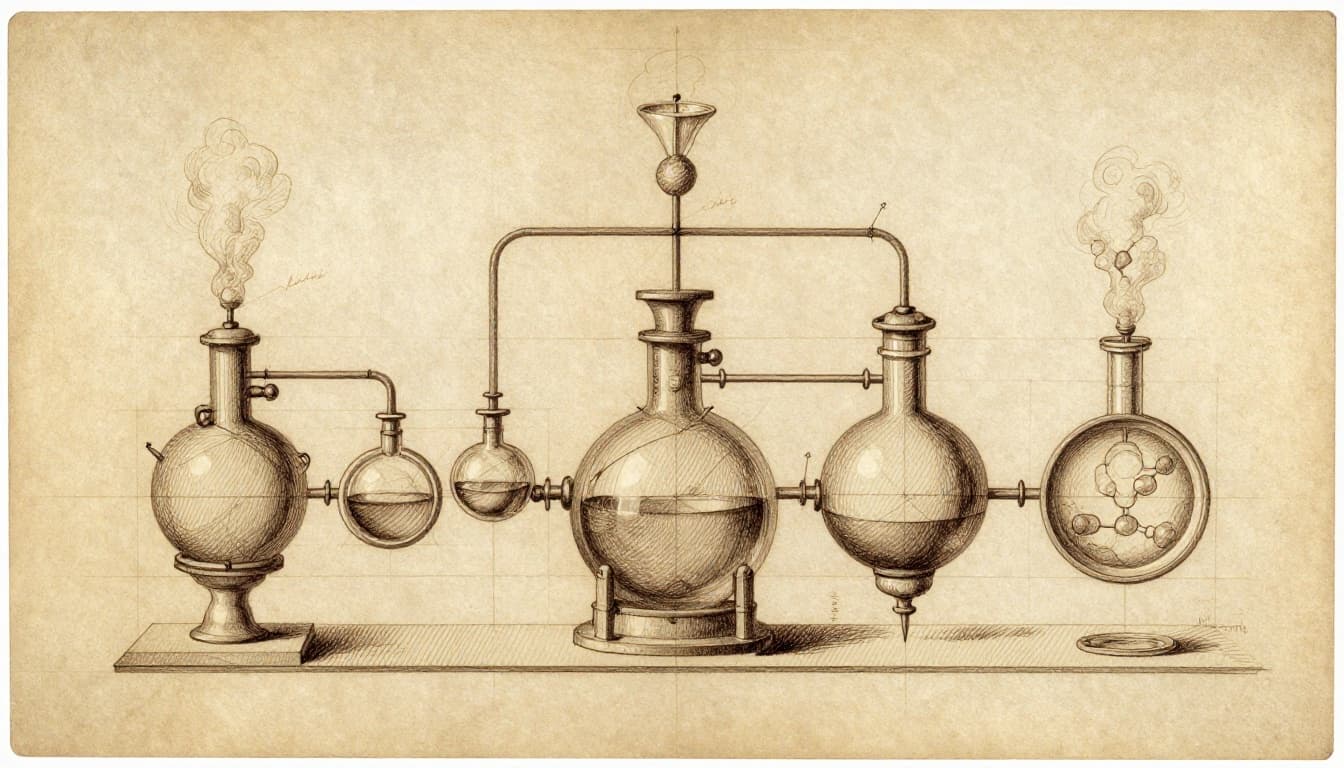
Anthropic Launches Claude Science AI Workbench for Pharma Research
July 1, 2026 • Source: MedCity News
Anthropic has launched Claude Science, an AI workbench specifically engineered for pharmaceutical researchers, aiming to automate and significantly accelerate drug discovery processes. This platform integrates critical databases, laboratory tools, and high-performance computing to move beyond conventional AI assistance, directly performing complex research tasks and reducing operational bottlenecks within the drug development lifecycle.
**Key Facts:** • Anthropic launched Claude Science, an AI workbench. • Designed specifically for pharmaceutical researchers. • Aims to automate and accelerate drug discovery processes. • Integrates databases, lab tools, and computing power. • Strategic move for vertical specialization in healthcare AI. • Intended to reduce information and operational delays. • Targets major pharmaceutical enterprises like Novartis.
Anthropic, a prominent AI development firm, today launched Claude Science, a specialized AI workbench designed to fundamentally transform pharmaceutical research. This platform moves beyond conventional AI assistance, directly integrating vast databases, sophisticated laboratory instrumentation, and robust computing power to automate complex drug discovery tasks and significantly reduce information and operational delays for drug developers.
Strategic Integration for Accelerated Discovery
Claude Science represents Anthropic's strategic pivot into highly verticalized AI solutions, specifically targeting the pharmaceutical sector. This workbench is engineered not merely to assist scientists but to actively perform complex research functions, streamlining the early stages of drug development. The platform’s capability to integrate disparate data sources, connect with laboratory equipment, and leverage advanced computational models is poised to enhance the efficiency of compound identification and validation.
The introduction of Claude Science ahead of Anthropic’s anticipated IPO underscores the company's commitment to monetizing its AI capabilities through sector-specific applications. Anthropic's CEO emphasized the platform's ability to mitigate information delays and operational inefficiencies, which are chronic challenges in drug development. By automating data synthesis and experimental design, Claude Science aims to shorten the path from initial hypothesis to viable drug candidate, thereby compressing R&D timelines.
For technology leaders within pharmaceutical enterprises, this launch signals a critical evolution in AI integration. It moves beyond theoretical applications to a practical, integrated workbench model. Enterprise buyers evaluating such systems will prioritize robustness, data security, and seamless integration with existing IT infrastructure and laboratory information management systems (LIMS) to ensure rapid deployment and measurable return on investment, marking a new benchmark for AI utility in drug discovery.
Operational Impact Across the Biological Sciences
The operational implications of Claude Science extend across several critical sectors. In Pharmaceutical & Drug Development, the platform promises to accelerate target identification, lead optimization, and pre-clinical testing, potentially reducing the hundreds of millions of dollars and years typically spent. Biotechnology Startups stand to gain significantly by accessing advanced AI capabilities that can level the playing field against larger incumbents, allowing for faster iterative research and proof-of-concept development with fewer resources.
Academic Research & Universities can leverage Claude Science to explore novel biological mechanisms and compounds with unprecedented speed, pushing the boundaries of fundamental science. This access democratizes high-throughput research, enabling smaller labs to tackle complex problems previously requiring extensive infrastructure. Clinical Research Organizations (CROs) may find value in optimizing data interpretation from early-stage trials, predicting compound behaviors, and refining trial design parameters to improve success rates and reduce costs.
Beyond direct drug discovery, segments like Agricultural & Food Science could adapt similar AI workbench principles for developing new crop varieties, pest control agents, or food additives. Biomanufacturing & Bioprocess operations could indirectly benefit from faster, more predictable upstream research inputs, optimizing the entire bioproduction pipeline. Diagnostic & Clinical Labs might utilize such AI to identify novel biomarkers or interpret complex genomic data more efficiently, ultimately improving patient outcomes through faster and more accurate diagnostics.
Market Position, Economic Drivers, and Future Outlook
Anthropic’s entry with Claude Science intensifies the competitive landscape within healthcare AI, positioning it against established players and emerging startups focusing on computational biology. The platform’s comprehensive integration strategy, encompassing databases, lab tools, and computing power, aims to differentiate it from more siloed AI offerings. The mention of Novartis, a global pharmaceutical giant, suggests Anthropic is targeting major enterprise clients, indicating potential high-value contracts and widespread industry adoption if successful.
The economic implications for enterprise buyers are substantial. By reducing the time and cost associated with drug discovery, pharmaceutical companies can bring therapies to market faster, extending patent life and increasing revenue potential. For technology leaders, investments in platforms like Claude Science represent a shift from purely infrastructural IT spending to strategic R&D investments, demanding careful evaluation of scalability, interoperability, and the talent required to maximize AI utility.
Industry analysts will closely monitor Claude Science's adoption rates and demonstrable impact on drug discovery timelines. Its success could validate the vertical AI workbench model as a standard for scientific research, prompting further specialization across other industries. This launch underscores the broader trend of AI becoming an indispensable, integrated component of scientific methodology, promising to reshape how biological and chemical research is conducted globally.
Published July 1, 2026
More NewsLast updated: July 1, 2026